convert-png-to-jpeg
convert to png
JPG vs JPEG: Understanding the Most Common Image File Format
Webmasters encounter images constantly. Although you don't need to be an expert in image manipulation to edit or upload images to websites, you should familiarize yourself with the most common formats for files such as JPEG. Or is it JPG?
In this post, I'll show a JPG contrast with JPEG showdown so you understand the differences, as in other aspects that will allow you to upload the top images you can to your website to provide the best user experience. If you're looking for an in-depth overview of the current .webp file format We've got you covered as well.
Ready? Let's get started!
Table of Contents
- What is JPEG?
- What is JPG?
- JPG vs JPEG: Similarities Between the Two
- JPG vs JPEG 2000
- Convert Image Files to JPG: Common Methods
convert to jpeg
As a site owner working using images, you've probably seen this file type JPEG at some point in your editing and uploading journeys.
Did you be aware that the word JPEG could be actually used as a reference for three different items?
It's true, and we're here to explain all of them:
1. JPEG Lossy Compression
When you upload pictures to your website It's crucial to ensure you don't influence your website's speed and performance by using huge images that consume resources and take a long time when loading up on front end of your website. In fact, all website owners should optimize their images in a way that reduces the size of their images . This will help preserve the loading times as well as the user experience.
This is where JPEG is useful. JPEG is a lossy compression method that is used to make sure that the digital images that are used are as small as possible and load quickly in the event that someone would like to see them.
Here are some points to remember about lossy compression:
- The size of the image being compressed is permanently reduced by eliminating any unnecessary ( redundant) informationfrom the image.
- Image quality isn't perfect and it's sometimes so slight the average site viewer isn't able to tell.
- During the compression process each pixel is then compared to its neighbors by a ratio ranging from 2:1 all the way to 100 times one ( any pixels that have the same characteristics as the original are then removed because they are considered not needed).
- JPEG lossy compression is typically utilized for photographsand complex still images.
- By compressing images with lossy compression, it determines the size of the image and the value trade-off ( e.g., smaller files = worse image quality).
- In the longer you save and edit one image you do and save, the less professional the image of the image will be.
If you're adept at editing images with lossy compression, there's the possibility of saving the image quality while reducing the size of its file. You can do this through working with RAW JPEG images, making edits, and saving the image only once.
convert to bmp
If you're not interested in having to apply JPEG lossy compression of your images on your website There's another option: lossless compression.
Lossless compression saves your images in a completely distinct format ( usually PNG). While the image quality cannot be diminished because no information is eliminated, know that with lossless compression the final dimension of your photo will be bigger than the one created by lossy compression. This could lead to lower loading speeds for pages.
2. Joint Photographic Experts Group (JPEG)
JPEG is the acronym for Joint Photographic Experts Group, that's the name of this sub-committee, which was instrumental in the development of the JPEG standard in addition to other still picture coding standards belonging to the larger group called ISO.
The initial JPEG standard was introduced in the year 1992 by ISO ( International Organization for Standardization). ISO is accountable for preparing standards that "...provide requirements and specifications, guidelines or specifications that can be employed consistently to make sure that materials, products, processes as well as services are suitable for purpose."
ISO sets the standards for all things including digital images in the hope of providing consumers and customers with most superior products and services. 
Image source: Wikimedia Commons
This international group is a non-profit group of members from 164 countries which makes it the world's largest developer of standards.
3. JPEG as a File Format
The third way JPEG will be used is talking about a particular file format or as a method of storing and save digital images. This is the most likely way you're familiar with JPEG because it's one of the formats for file options when you store an image that you've altered. 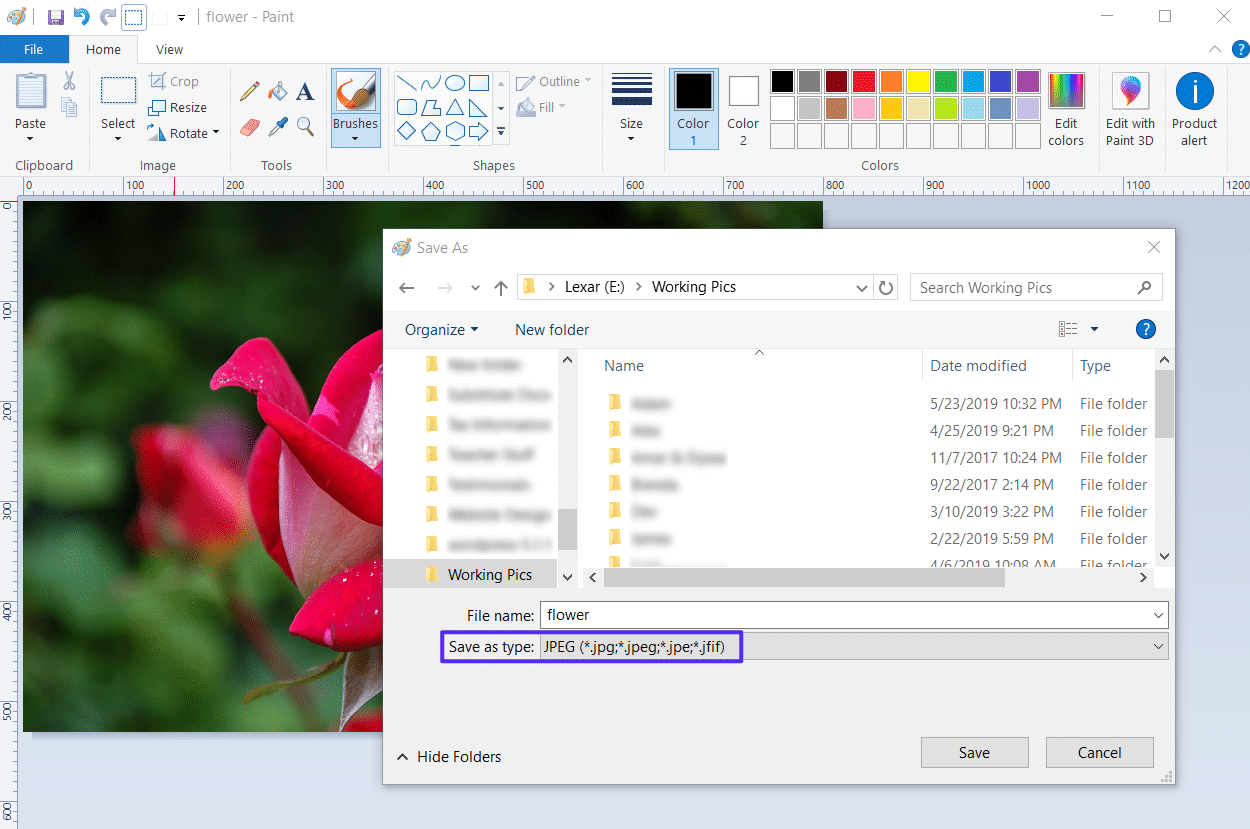
JPEG file format
Here are some interesting facts about how to use the .jpeg Format:
- The most popular image file format used by digital cameras and other devices for capturing images.
- The system supports 16,777,216 colors. These are created using 8 bits of each RGB color model.
- It can display an impressive 16 million colors simultaneously This makes the combination of color and nearly perfect.
- Supports a maximum size of 65,535 x 65,535 pixels.
- The size is reduced of an image by around 50-75% ( because of lossy compression) when saving
In addition, this file format is not recommended for images with sharp edges since the colors blend more than if the image was saved in .png file, which shows distinct pixels as a group.
Let's find out what JPG is.
What is JPG?
What is JPG when compared in comparison to JPEG? 
File extensions in Windows
Well, when it comes to .jpeg instead of .jpg, the truth is there's no distinction between the twoexcept the amount of characters.
Crazy right? Let us explain.
The term JPG originates from the earlier versions of Windows operating systems. Particularly, the MS-DOS 8.3 and FAT-16 file system allowed a maximum 3 letters for names for files, in contrast to other operating systems that resembled UNIX such as Mac or Linux, which didn't have this limit.
So, on Mac and Linux systems Images saved as JPEGs had the extension .jpeg. But when it came to saving the same type of images on Windows and Windows 8, the file extension had to be reduced to .jpg so it didn't exceed the 3-letter limit.
Today, Windows operating systems accept three or four letter file extensions like .jpeg as well as .jpg. However, because so many people are using Windows for so long and are used to saving their images as JPGs which is why they've never stopped. Due to this, photo editing software such as Adobe Photoshop and GIMP save all JPEG images in default to the .jpg file extension on the both Windows and Macs to avoid confusion.
JPG vs JPEG: Similarities Between the Two
Okay, now you understand that .jpeg and .jpg files are the same exact thing. But just to drive that point home, and make sure you keep it in mind for the future, we're going to take a look at the similarities between JPEG in addition to JPG images.
1. Both Are Raster Images (Not Vector Images)
Computer-generated images can be constructed as vector or raster images. Since JPEGs are raster images, so too are JPGs.
Bitmaps are graphic representations of images. A bitmap is simply a grid of small pixels that when joined together create an image. In terms of definition, raster pictures comprise of smaller squares ( or pixels) of color that are each encoded with a particular shade or hue that when placed together, create an image that is logical to take a look at. 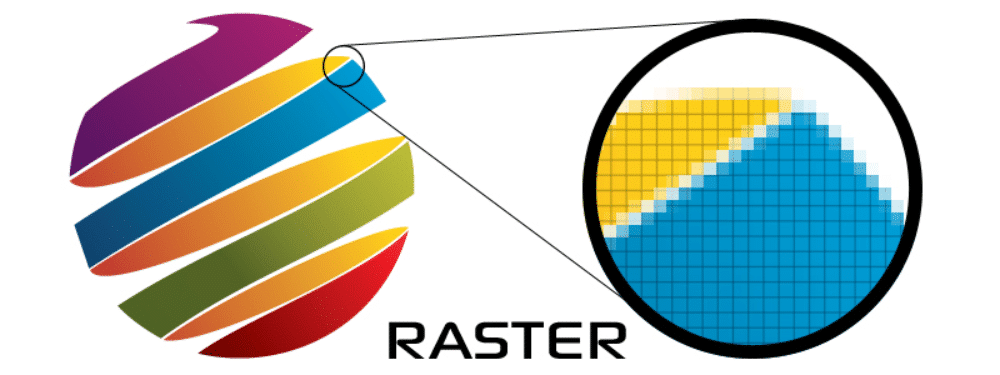
Image source: PrintCNX
Here's more information about raster images to assist you in understanding:
- The best option for non-lined images such as photographs or scans of artwork or even detailed graphics.
- They are characterized by subtle hue or shades and also very undefined lines and shapes.
- Due to their that they are pixel-based, they have problems with quality when blown in size ( they become jagged and expose individual pixels).
- They are defined and displayed at a certain resolution. The resolution is calculated in dots per inches ( dpi).
- The greater the dpi, greater the resolution and aesthetic quality of image.
- The most common raster file formats are: TIFF, JPEG, GIF, PCX and BMP files.
- Images in the Raster format are what is known as the Web standard, meaning they are the preferred image for all images found on the internet.
As previously stated, JPEGs and even JPGs are not vector images. 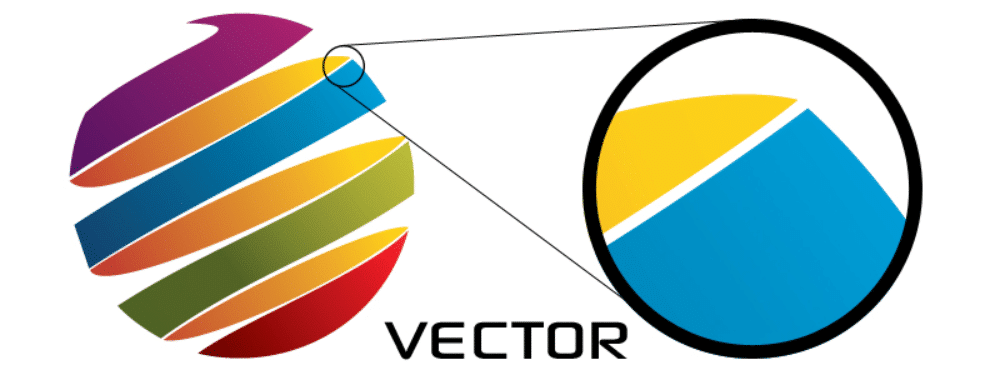
Image source: PrintCNX
Here's some information regarding vector images, so you're able to recognize the difference:
convert-to tiff
Want to know how we increased the amount of traffic we receive over 1000%?
Join more than 20,000 people who receive our weekly newsletter that contains insider WordPress strategies! Sign-up Now!
- Images are created using mathematical formulas which define geometric shapes such polygons, lines or curves, circles and rectangles.
- Perfect for straight-edged pictures like line art.
- Since there aren't color gradations, they work well for flat pictures that are uniformly colored.
- Incorporate popular graphics like logos, letterhead, and fonts.
- Scale up or down without losing quality since they don't rely on pixels to make the image complete.
2. Both Terms Mean the Same Thing
Have you ever thought about the term JPEG and the way it stood on behalf of the Joint Photographic Experts Group? Well, you guessed it that they both JPEG along with JPG are abbreviations used for the same ISO sub-committee.
3. Both Are Used for the Same Image Types
Because they're raster images as opposed to vectors, each of the .jpeg and .jpg formats are ideal when utilized for digital photography. Digital photographs contain extensive color gradations that look seamless when saved as raster JPEG or JPG images. This means your site visitors will always see a beautiful image when it's saved to an .jpeg/.jpg upload to your site.
Learn more about image file types and how they impact your website.
4. Both Lose Some Quality When Saved
Since the .jpeg against .jpg comparison is ineffective ( because they are the same exact thing) So it is normal that the compression technique used on both formats -lossy compression is a cause of loss in image quality when the size decreases.
Furthermore, this means that no matter which file extension you use ( either .jpeg or .jpg), your image's file size will be smaller than what it had been originally, and this will result in faster loading time when uploaded to your site and people visiting your website.
In the final analysis, JPEGand JPGs are similar and have several primary uses that are to decrease the file size of images for better web browsing and provide users with an easy method to compress their pictures after saving. Name the file with a commonly used file extension that is recognised by many.
Then ask yourself: JPG vs JPEG, which is better? From there, you shouldn't worry too much as the answer is neither. They're identical and the choice of which you decide to use is just a matter your preference.
JPG vs JPEG 2000
If you've ever been searching for information concerning JPEGs and other JPGs, you may have come across the term JPEG 2000and wondered what in the world it was. Since it's an option for most photo editing programs.
JPEG 2000 was an image encoder created by the Joint Photographic Experts Group in 2000 that was designed to be better than the JPEG standard currently in place. Actually, it was developed to provide lossless compression for Images that utilize advanced compression techniques based on a discrete wavelength transformation.
If you're putting up a lot of photos and images to your site, you shouldn't need to load poor pages to your users right? We provide lightning fast servers and 24/7 world-class assistance provided by WordPress experts. Learn more about our plans
It allowed people to make their photos more efficient and save them in JPEGs, without degrading the quality of the image.
Here are a few of the most important characteristics that are part of JPEG 2000:
- Advance Compression Tools:unlike traditional JPEGs, JPEG 2000 was able to use lossy and lossless compression ( even on a single image file).
- Progressive Decodingenables viewers to view the lower quality version of an image even though the entire is still downloading at a background. As more data is downloaded the quality of images improves for the user.
- Higher Compression Ratioswhen it is about lossy compression JPEG 2000 will compress an image as much as 20-200% over JPEG, while maintaining the same image quality compared to JPEG. JPEG image of the same resolution.
Furthermore, JPEG 2000:
- Transparency preservation for images.
- Can provide bi-level, grayscale color, palette-color, as well as full-color image information.
- This includes unlimited amounts of personal or specific-purpose information within metadata.
- Larger image sizes can be handled ( greater than 64K pixels) and without tilting.
- Ultra-low latency, which is particularly beneficial when streaming live TV.
- Scalability, both in resolution and quality.
JPEG 2000 Limitations
While JPEG 2000 offers a variety of excellent features and is believed to be the next best technology for digital images to code however, there are some reasons it is still not an ideal file format for the majority of people.
- There is no Universal browser compatibility ( only supports Safari).
- Uncompatible for JPEG ( must encode a new standard and support the original JPEG).
- Encoding JPEG 2000 files can be CPU intensive, which can stress servers and cause slowdowns.
- Many websites and cameras aren't yet ready to adopt the format due to it not being universally accepted.
Due to its limitations you'll be hard-pressed to find the JPEG 2000 file format as an option to save your digital photos. While it's better than JPEG, until it is accepted by everyone as a standard, you'll likely bump through a lot of compatibility issues which will make your life more difficult as a webmaster than it should be.
Convert Image Files to JPG: Common Methods
There are a variety of options in which you could save your pictures in .jpg as well as .jpeg files. Let's take a look at some.
1. Windows Paint
If you're running Windows you are able to save any image to .jpeg or .jpg with the help of Windows Paint. Simply upload your image to Windows Paint, go to the File menu, select>> Save As File> Save to, choose the image destination, enter the name of the image, then choose JPEG (*.jpg, *.jpeg, *.jpe, *.jfif)from the dropdown list. 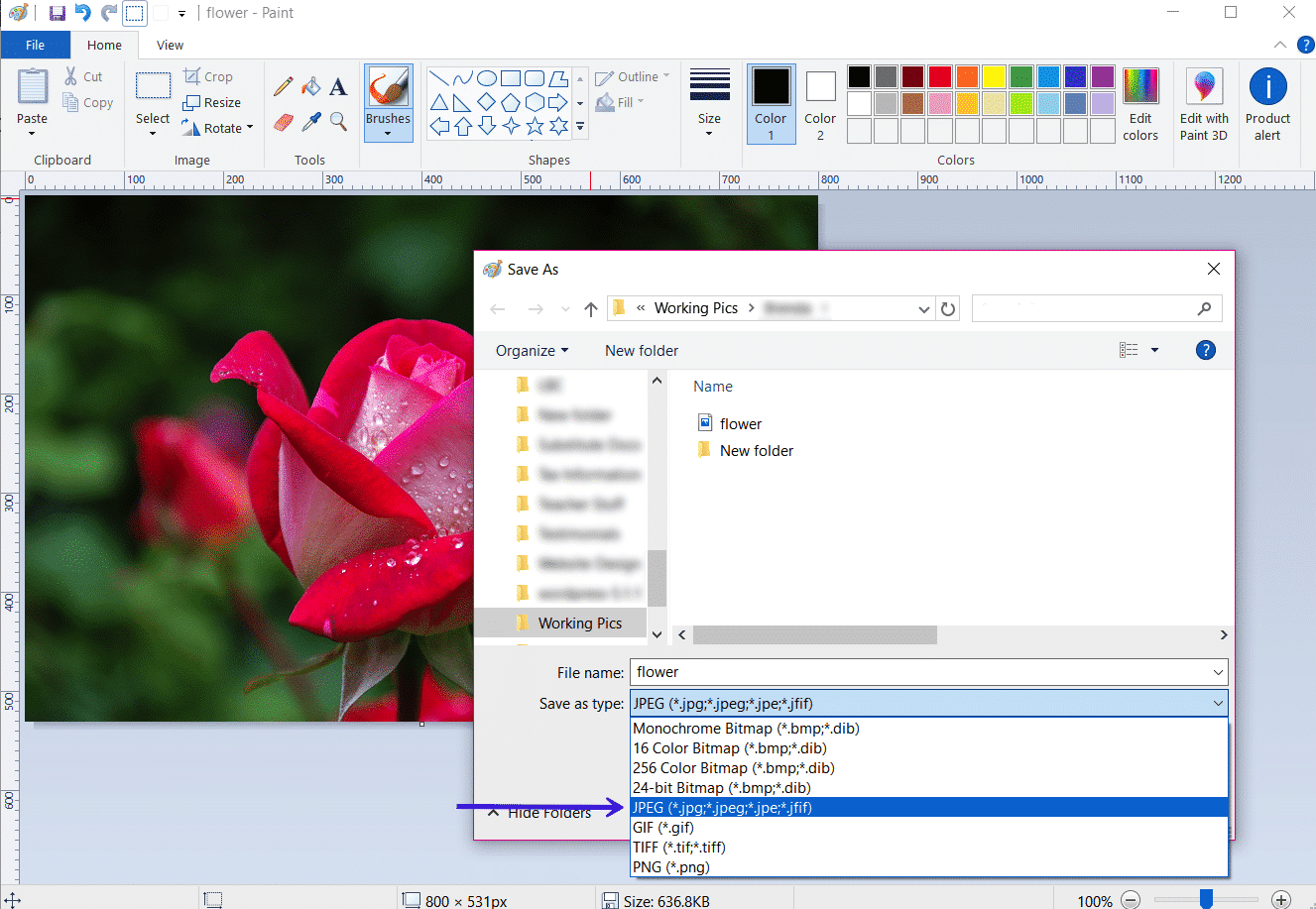
Windows Paint
Then click "Save..
2. Affinity Designer
Affinity Designer is similar to other image-editing software such Adobe Photoshop. If you want to save an image as an JPG using a software like this, you must first open the application and uploading the image. Make any adjustments you'd like and click "File">> export.... After that, click your JPEG icon, choose the quality ( best, high medium, low, or high), and select Export. 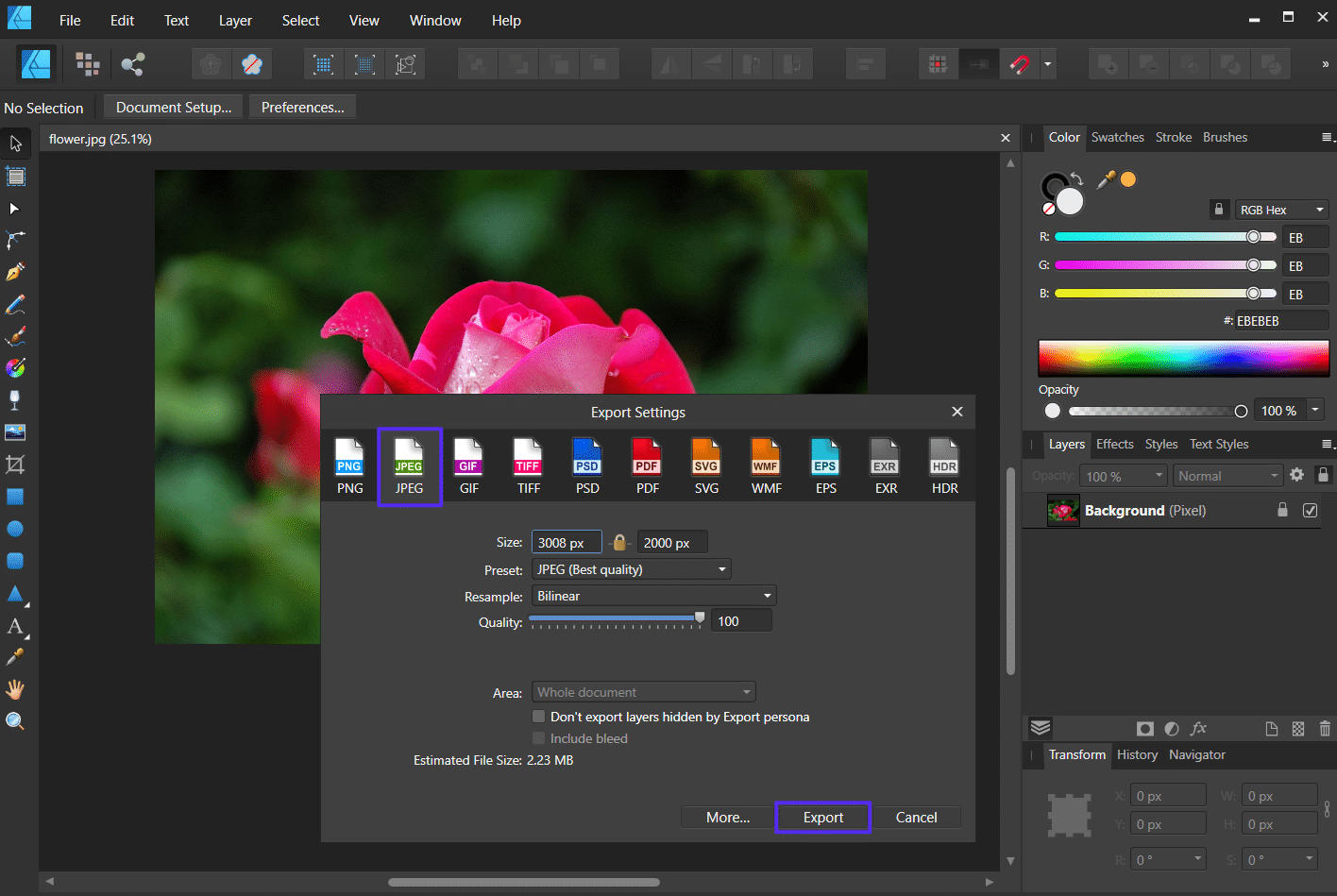
Affinity Designer
If you do this then, after that, the Save As dialog will open so you can pick a destination, name the image, and ensure that you are saving the file as JPG. 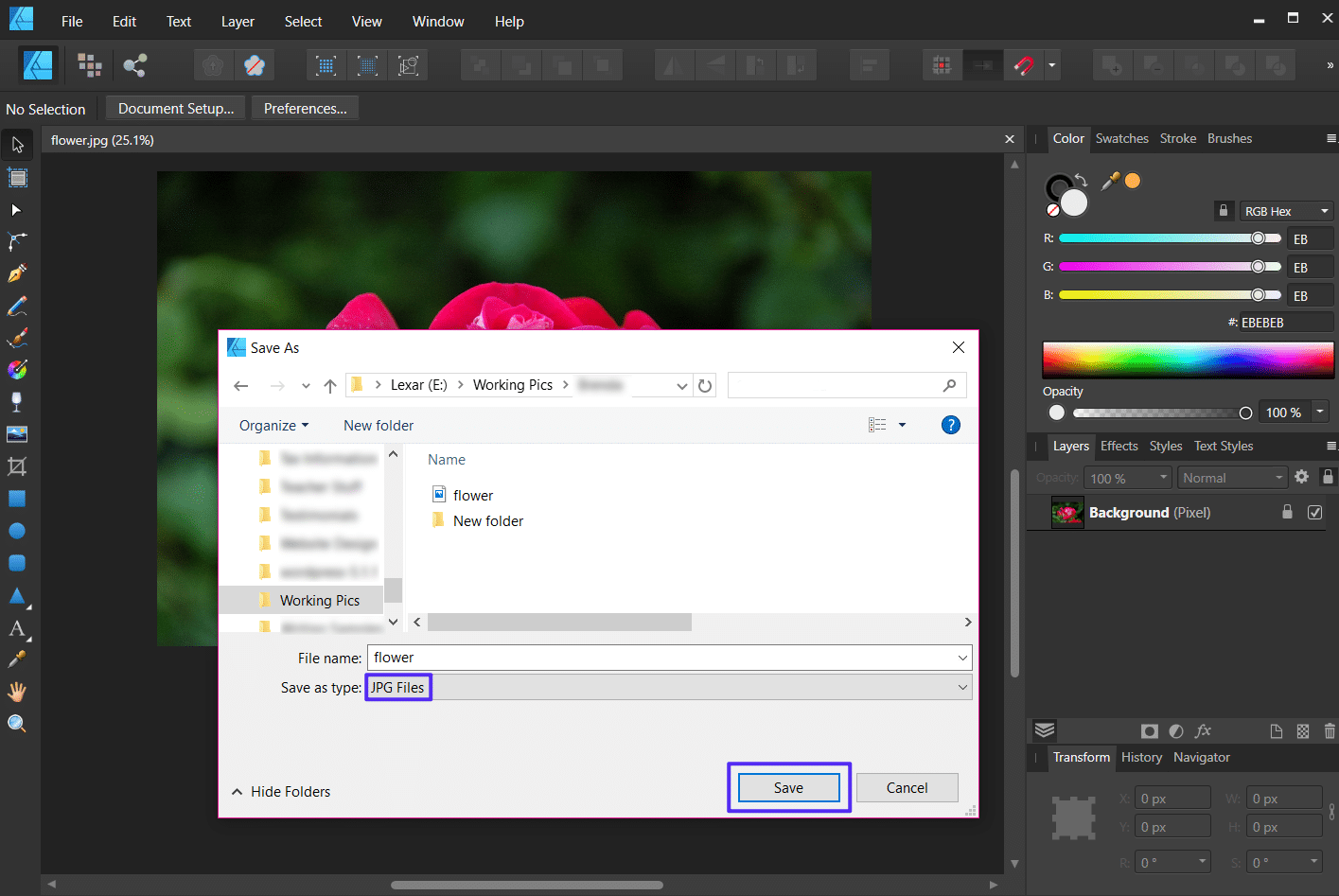
"Save as" in Affinity Designer
Click Save.
3. Online Converter Tool
If you want to convert images to JPG There are a number of free online jpg converters that can assist. For example, FileZigZag is a free online file converter that's simple to use. Drag and drop your image file or upload the file, choose the file type to convert the image into entering an email address, then click Convert. 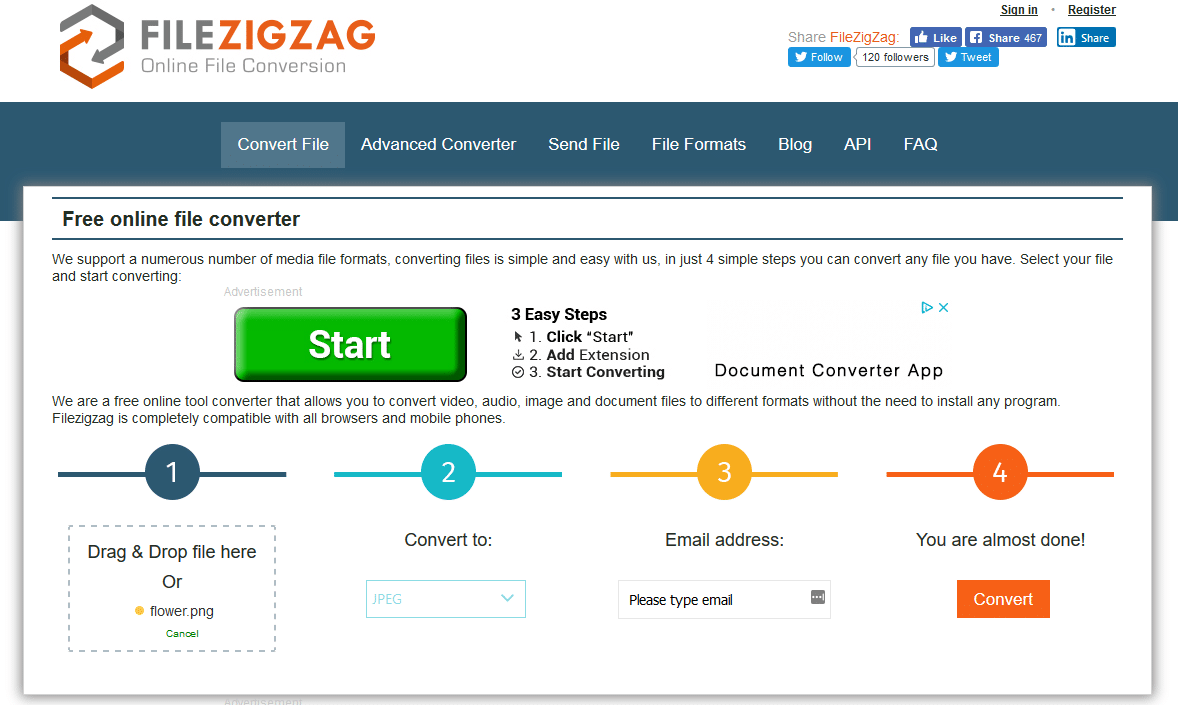
Convert png to jpeg FileZigZag
Of course, you might not want to hand over your email for convert your image into JPG. This is why we've listed the best free and premium options for you to check out:
- XnConvert : perfect for advanced image editors that require a large number of image formats, and the capability to bulk convert, and work with Windows, Mac, or Linux.
- Zamzar :a free online tool for people with big photos ( up to 50MB) who want the option of having the final image emailed or not.
- adapter : a simple image converter , which can work with batch images. It converts images instantly and works with macOS as well as Windows.
Of of course, these are only some of the available options for you to consider if want to convert images to JPG.JPG vs JPEG: What's the difference? What is JPEG 2000? Get the answer (and more) in our extensive guide! CLICK TO TWEET
Summary
JPG vs JPEG are the most commonly used extension of files and compression methods for people wanting to store or save images in digital format. This is particularly true for webmasters that wish to display appealing images and ensure a great user experience.
We're happy to inform you that it doesn't whatever you'd prefer .jpeg, .jpg or .webp type of files, you're sure to get the same outcome: beautiful images that are loaded extremely quickly for site users.
Save time, costs and increase site performance:
- Help is available immediately From WordPress experts on hosting, 24/7.
- Cloudflare Enterprise integration.
- Global audience reach with 28 data centers around the world.
- Optimization with Built-in Application Optimization with our built-in Application.
All of that and much more, in one plan with no long-term contracts, assisted migrations, and a 30-day-money-back-guarantee. Go through our plans, or contact sales to determine the best plan for you.
Use this tool to compress image
Comments
Post a Comment